
Why This Needs Its Own Calculator
Milk supply, engorgement, and swelling all affect measurements in ways that don’t apply outside of pregnancy and nursing. A single measurement taken at the wrong moment (right after a feed vs. right before one, for example) can give two different results for the same body.
When to Measure
For the most usable everyday number, measure mid-way between feeds rather than immediately after one, when you’re at your smallest. Expect to re-measure every few weeks in the early postpartum period as supply regulates.
What to Look For Beyond the Number
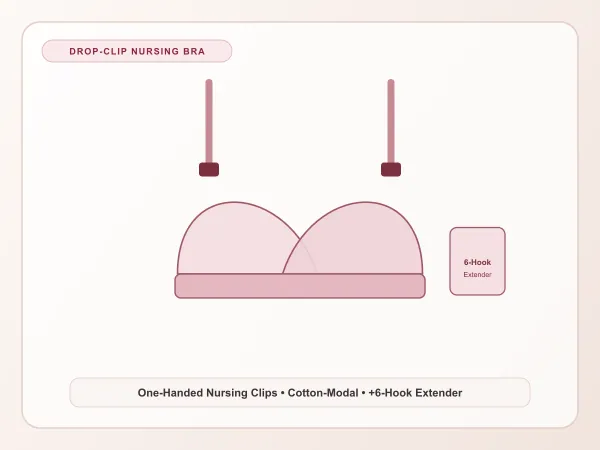
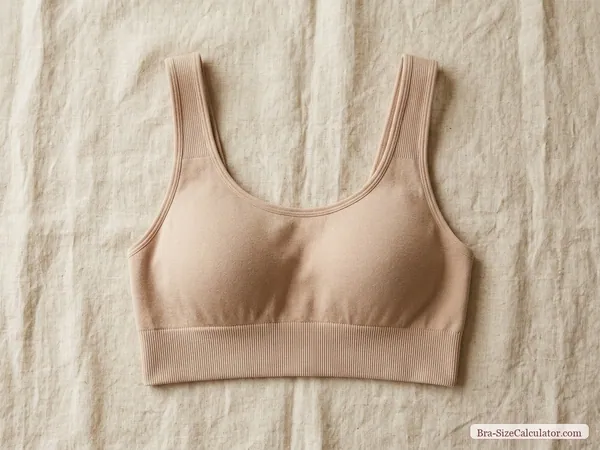
Nursing access, hook range for size fluctuation, and soft fabric against sensitive skin all matter as much as the size itself. See our Nursing bra size chart for brand-specific notes.
A Timeline, Not a Single Size
Pregnancy growth, the days when milk first comes in, ongoing breastfeeding fluctuation, and eventual weaning are four different phases. Each with a different accurate size. Expecting one bra to fit all four stages is the single biggest source of frustration here.
Why Waiting Helps Early On
Buying a full wardrobe before milk regulates (usually a few weeks in) often means replacing most of it soon after. Sizes can shift meaningfully during that window. A couple of flexible, wire-free options to start is more practical than a full stock-up.
Features That Matter Most Right Now
Drop-down cups for feeding access, wider bands to handle engorgement swelling, and no underwire early on (which can restrict milk ducts during periods of fullness) all matter more here than in everyday sizing.
Re-Measuring Cadence
Re-measure at the end of pregnancy, again a few weeks after milk regulates, and again if breastfeeding continues past a few months. Three checkpoints instead of one, since this stage genuinely moves faster than most others.